When Focus, Mood, and Brain Repair Come Together
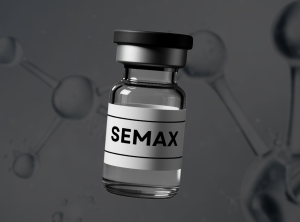
Most cognitive enhancers either wake you up, calm you down, or temporarily sharpen memory. But Semax? It’s being studied to do all three plus support long-term brain repair. No wonder it’s becoming one of the most researched neuropeptides in the U.S. and Canadian biohacking circles.
Originally developed in Russia to treat post-stroke recovery and brain trauma, Semax has evolved into a go-to subject of study for those exploring focus, stress resilience, dopamine regulation, and BDNF activation. This guide will give you the no-fluff, science-first breakdown of how Semax works and why it’s a standout in the cognitive research stack.
Compliance Notes
Disclaimer: This content is for educational and informational purposes only. Peptide Genius is an educational platform and does not sell, prescribe, or promote the human use of any compounds. All compounds discussed are intended for research purposes only. Information presented here is based on publicly available scientific literature and personal commentary.
What Is Semax? (And Why It’s Not Just Another Nootropic)
Semax is a synthetic peptide derived from adrenocorticotropic hormone (ACTH), though it contains no hormonal activity. Instead, it functions as a neurotrophic agent supporting brain plasticity, neurotransmitter balance, and neuroprotection.
Its popularity in research is due to its unique effects on:
- BDNF production (brain-derived neurotrophic factor)
- Mood and motivation through dopamine/serotonin modulation
- Cognitive performance, especially under stress
Approved for clinical use in Russia, it’s still undergoing research elsewhere but is quickly becoming a favorite among cognitive peptide protocols.
Key Research Highlights:
- A study in Neuroscience and Behavioral Physiology found that Semax improved cognition and brain resilience in post-trauma models (source).
- The Institute of Molecular Genetics, Russian Academy of Sciences showed increased BDNF expression and enhanced learning in test subjects (source).
- A review in CNS Drug Reviews noted Semax’s ability to protect against stress-induced cognitive decline (source).
Why Semax Matters Right Now
With rising demand for natural focus enhancers, mental clarity during burnout, and non-stimulant mood support, Semax is positioned at the intersection of nootropic science and neurorepair.
Researchers are currently exploring Semax for:
- Stress resilience and focus during cognitive load
- Memory and BDNF enhancement models
- Neurodegenerative support studies
- Mood and executive function regulation
In short, it’s a multitool for brain-focused research.
Key Benefits Being Explored
- Increases BDNF, supporting learning, memory, and neurogenesis
- Boosts dopamine and serotonin, aiding in mood and motivation
- Supports focus, clarity, and recall
- Reduces stress and cortisol-linked cognitive fatigue
- May improve symptoms in ADHD or neuroinflammatory models
Semax may act on both GABAergic and dopaminergic systems while promoting long-term structural change via BDNF and synaptic signaling pathways.
Potential Side Effects
Semax has shown strong tolerability in most research models, but occasional effects include:
- Nasal irritation (most common with intranasal administration)
- Increased alertness or restlessness
- Headache (rare, often dose-dependent)
- Mood elevation due to neurotransmitter upregulation
These are typically short-lived and resolve with titration.
Dosing Guidelines (For Research Use Only)
Intranasal: 300–600 mcg daily, split into 2–3 doses
Subcutaneous Injection: 200–500 mcg daily
Cycle Duration: Can be used daily or cycled (e.g., 5 days on, 2 off)
Best Practice: For mental clarity, morning and midday dosing is common in study models.
Reconstitution & Storage
- Reconstitute lyophilized Semax with 1–2 mL bacteriostatic water
- Swirl gently to dissolve
- Store in refrigerator at 2–8°C (36–46°F)
- Use within 30 days of mixing
For intranasal research, a sterile atomizer may be used for consistent delivery.
Similar Peptides to Compare
- Selank: Often paired with Semax for enhanced stress reduction and GABA support
- Dihexa: Another cognitive peptide, researched for Alzheimer’s and advanced neurorepair
- BPC-157: Systemic repair, sometimes stacked for neurological recovery models
Many neuro-focused stacks combine Semax + Selank for balanced focus and calm.
Mini FAQ: Semax
Is Semax legal in the U.S. and Canada?
Yes, for research-use only.
What does “research-use only” mean?
Not for human consumption or therapeutic use. Lab research only.
Do I need a license to purchase it?
No license required. Must be 21+ and agree to research-only terms.
Is it better intranasal or injectable?
Depends on research model. Intranasal is most common.
What is a COA?
A Certificate of Analysis confirming purity, identity, and batch safety.
Conclusion + CTA
Semax is more than a nootropic it’s a brain-boosting, stress-shielding, neuroadaptive peptide researchers are leaning into more than ever. If your work involves focus, brain plasticity, or emotional regulation, this is one to study closely.