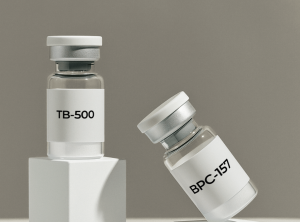
In the world of tissue regeneration, recovery, and repair, few peptides are as revered as BPC-157 and TB-500. Whether you’re rehabbing an injury, optimizing post-surgery healing, or supporting high-volume training recovery, these two peptides often take center stage.
But while they share similarities, BPC-157 and TB-500 operate through different biological mechanisms—and understanding those differences is key to choosing the right tool for your goals.
What is BPC-157?
BPC-157 (Body Protection Compound) is a synthetic fragment of a protective protein found in gastric juice. It’s known for its rapid tissue healing and anti-inflammatory properties.
Key Benefits:
- Accelerates healing of tendons, ligaments, muscle, and skin
- Repairs the gut lining and supports GI health
- Enhances angiogenesis (formation of new blood vessels)
- Reduces inflammation and oxidative stress at injury sites
Mechanism of Action:
- Modulates growth factors like VEGF, FGF, and TGF-β
- Promotes cellular migration and collagen production
Typical Use Cases:
- Tendonitis, ligament sprains, and muscle tears
- Leaky gut, IBS, or ulcer recovery
- Post-surgical wound care
What is TB-500?
TB-500 is the synthetic version of Thymosin Beta-4, a naturally occurring peptide involved in tissue regeneration, immune modulation, and cell migration.
Key Benefits:
- Speeds healing of muscle, skin, eyes, and connective tissue
- Increases flexibility and mobility during recovery
- Reduces fibrosis and scarring
- Supports cardiovascular and neurological repair
Mechanism of Action:
- Upregulates actin-binding proteins to enhance cellular movement
- Promotes angiogenesis and tissue remodeling at a systemic level
Typical Use Cases:
- Chronic injuries and delayed recovery
- Systemic repair of multi-site inflammation
- Vascular or neurological healing support
Head-to-Head Comparison
| Feature | BPC-157 | TB-500 |
| Source | Gastric protein fragment | Thymosin Beta-4 analog |
| Primary Action | Targeted healing, gut + joints | Broad-spectrum tissue regeneration |
| Best For | Gut issues, soft tissue, joints | Muscle injuries, post-surgery |
| Delivery | SubQ or oral | SubQ or intramuscular |
| Onset | Rapid (few days) | Moderate (1–2 weeks) |
| Duration of Effect | Localized | Systemic |
| Stacking Potential | High (GHK-Cu, TB-500) | High (BPC-157, IGF-1, NAD+) |
Can You Stack BPC-157 + TB-500?
Yes—and they’re often better together.
- BPC-157 targets local, acute healing (especially joints, ligaments, gut)
- TB-500 supports systemic repair and cellular migration
Stacking allows you to address both surface-level and deep-tissue injuries simultaneously, which is ideal for:
- Athletes recovering from multi-tissue damage
- Post-operative healing protocols
- Aging individuals with widespread inflammation
Sample Healing Stack (8–Week Protocol)
- BPC-157: 250–500 mcg daily (SubQ near injury site)
- TB-500: 2 mg twice weekly (SubQ or IM)
- Optional Add-ons:
- GHK-Cu (1–2 mg 2–3x/week for skin/joint collagen support)
- NAD+ (100 mg subQ or IV weekly for energy + cell repair)
Cycle 8–12 weeks, followed by assessment and taper.
Final Thoughts
Both BPC-157 and TB-500 offer unmatched regenerative potential—but they serve slightly different roles. Think of BPC-157 as the scalpel for pinpoint repair and TB-500 as the systemic sweep that clears the way for long-term recovery.